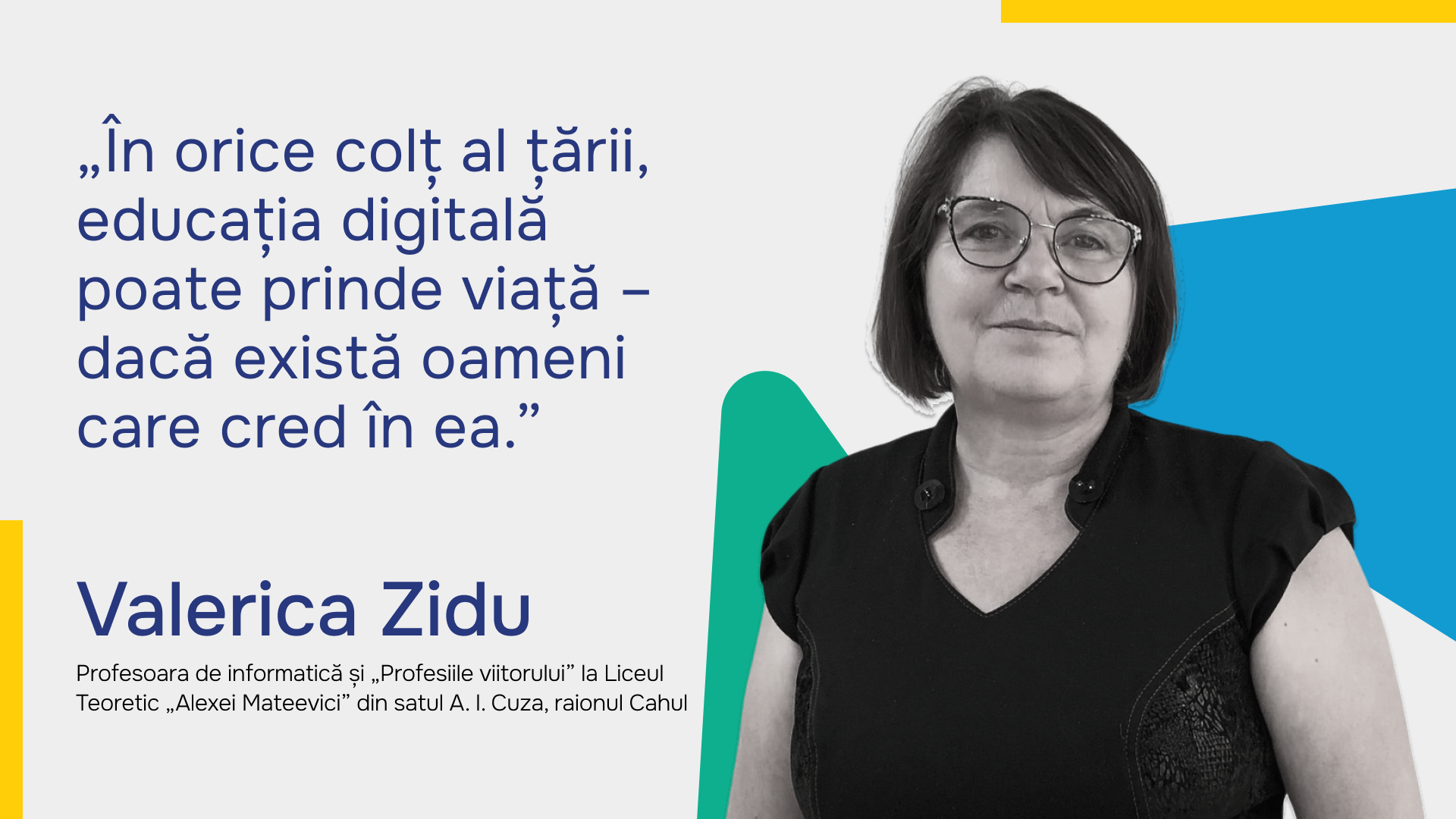
Valerica Zidu is one of those teachers who not only teach but also inspire. In a village in southern Moldova, she manages to bring the "professions of the future" closer to hundreds of students, transforming classrooms into spaces of discovery, innovation, and confidence.
A dedicated teacher and mentor in the "Tekwill Junior Ambassadors" competition, Valerica has been supported by the "Tekwill in Every School" program, implemented by INOTEK, participating in all the courses and guiding generations of students toward achievement. The results speak for themselves: Grand Prize in Graphic Design for the middle school team and 2nd place in Web Development for the high school team at the 2025 Tekwill Junior Ambassadors competition.
We invite you to read the interview with Mrs. Zidu – a story about passion, courage, and how investing in people can transform the future of digital education in Moldovan schools.
Tekwill (TW): For five years now, the "Tekwill in Every School" program has been implemented in the village of Al. Ioan Cuza. How has students’ attitude toward digital fields changed during this time?
Valerica Zidu (VZ): Students’ interest varies—some are more receptive, others need more time and support to discover what truly excites them. But we’re definitely seeing growing curiosity toward technology and a stronger desire to get involved in digital activities. Year by year, more and more students choose to attend the optional courses offered by the program. It’s clear proof that digital education is beginning to take root in our community, and the fact that students ask for these courses even outside regular school hours shows their genuine interest. Also, participating in the TJA competitions gives them extra motivation and helps them discover their abilities in a friendly yet competitive environment.
TW: What changes have you noticed in students since the eight digital subjects were introduced into the school curriculum?
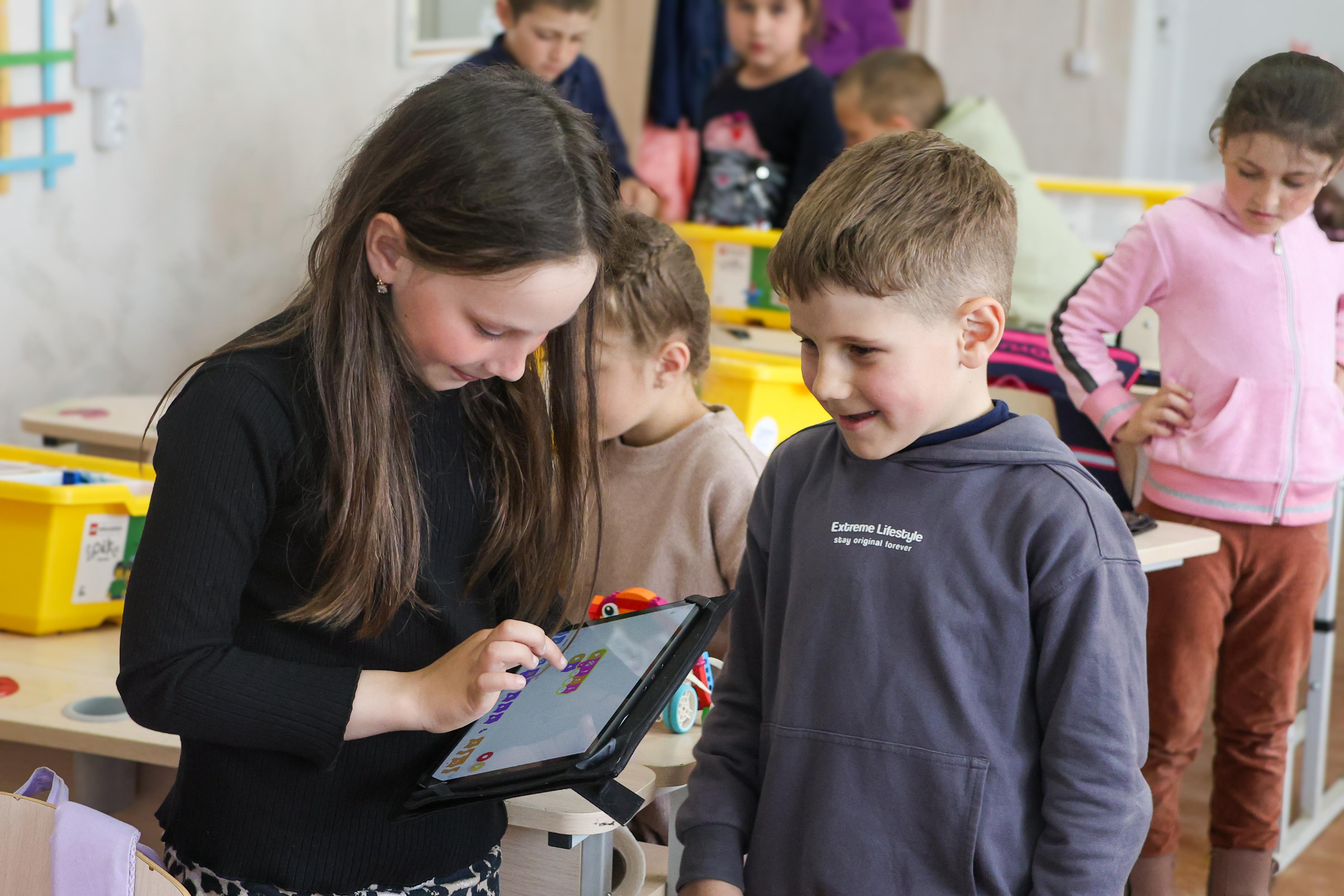
VZ: The "Tekwill in Every School" program came as a direct response to this need—it offers students not just engaging content, but also the opportunity to learn by doing, through projects, contests, and interactive activities. Students are more confident, more motivated, and show a clearer interest in careers in IT and digital fields. They’ve started to approach problems with more logical thinking, to work in teams, and to seek innovative solutions. Additionally, many of the skills they acquire are transferable and useful in other school subjects too.
TW: What challenges do you face teaching digital subjects in a rural school, and how do you overcome them?
VZ: One of the biggest challenges remains the limited access to modern equipment like educational robots or 3D printers. In a rural environment, such resources are hard to come by, and their absence can restrict practical exploration of digital concepts. There’s also a more subtle but equally important challenge: mindsets. Sometimes parents or even students don’t immediately understand the relevance of these courses for their future. The idea of "digital education" can seem abstract until they experience it firsthand.
TW: How do you make technical lessons useful in students’ real lives, not just on paper?
I believe the key lies in relevance and hands-on experience. We aim for each lesson to be more than just an information dump—it should be a step toward building real skills. We constantly work on applied projects, whether it's creating a website, a graphic design piece, or a simple app. We challenge students to think like creators, not just users of technology. This way, each assignment becomes meaningful because they see how what they’re learning can turn into a real, useful product.
TW: How do you decide which students go to competitions like TJA, and how do you prepare them? What skills do you most want them to develop during the process?
VZ: We select students who show commitment, perseverance, and a desire to learn. During preparation, we work on developing their technical skills, but also on communication, leadership, and time management. I help them understand that success in a competition also depends on strategy, adaptability, and teamwork.
TW: How was this year’s competition experience—for you as a mentor and for the student teams you coordinated?
VZ: It was an intense and emotional experience. As a mentor, I was thrilled to see my students evolve—from ideas to well-defined projects. We learned together, overcame challenges, and celebrated every success. It was a valuable journey for all of us. I was especially proud to see their work recognized—the middle school team competing in Graphic Design won the Grand Prize in the semifinals, and the high school team in "Web Design and Development" won second place. These results motivate us and confirm that we are on the right path.
We’re looking forward to the finals with optimism, where we have students competing in multiple categories: Mobile Apps, Emotional Intelligence in Communication. They are talented, committed, and eager to stand out, and I, as their mentor, am proud to support them on this journey.
TW: What do you think students have learned from this experience, beyond prizes and rankings?
VZ: They’ve learned to believe in themselves, to work in teams, to accept feedback, and not to give up when things get hard. Most importantly, they’ve come to understand that they can actively contribute to building the future—even from a small village.
TW: What message do you have for teachers who are still wondering whether it’s worth it or even possible to bring digital education to rural schools?
VZ: I would tell them that it is possible—and it’s definitely worth it. We don’t need to be tech experts to take the first steps; we just need to be curious, open-minded, and believe in our potential and that of our students. I’ve learned alongside them, I’ve made mistakes, I’ve experimented—but above all, we’ve grown. And when you see a child thanking you because they discovered a passion or a potential career through your classes, you realize that every effort matters. In any corner of the country, digital education can come to life—if there are people who believe in it.
In southern Moldova, the "Tekwill in Every School" program is supported by Inotek – EU Innovation Centre Cahul, as part of the “Inotek4Cahul” project, funded by the Government of Sweden.