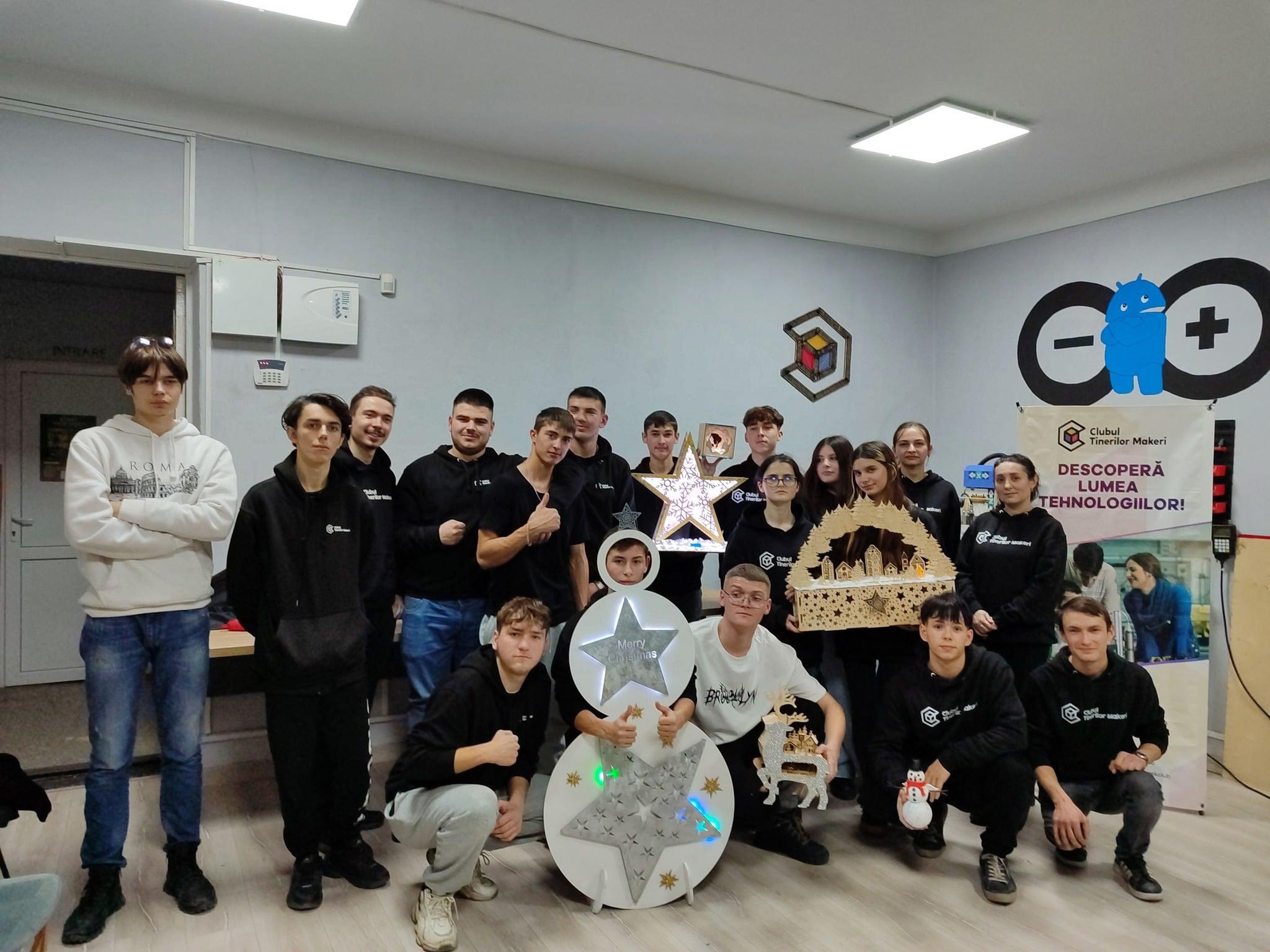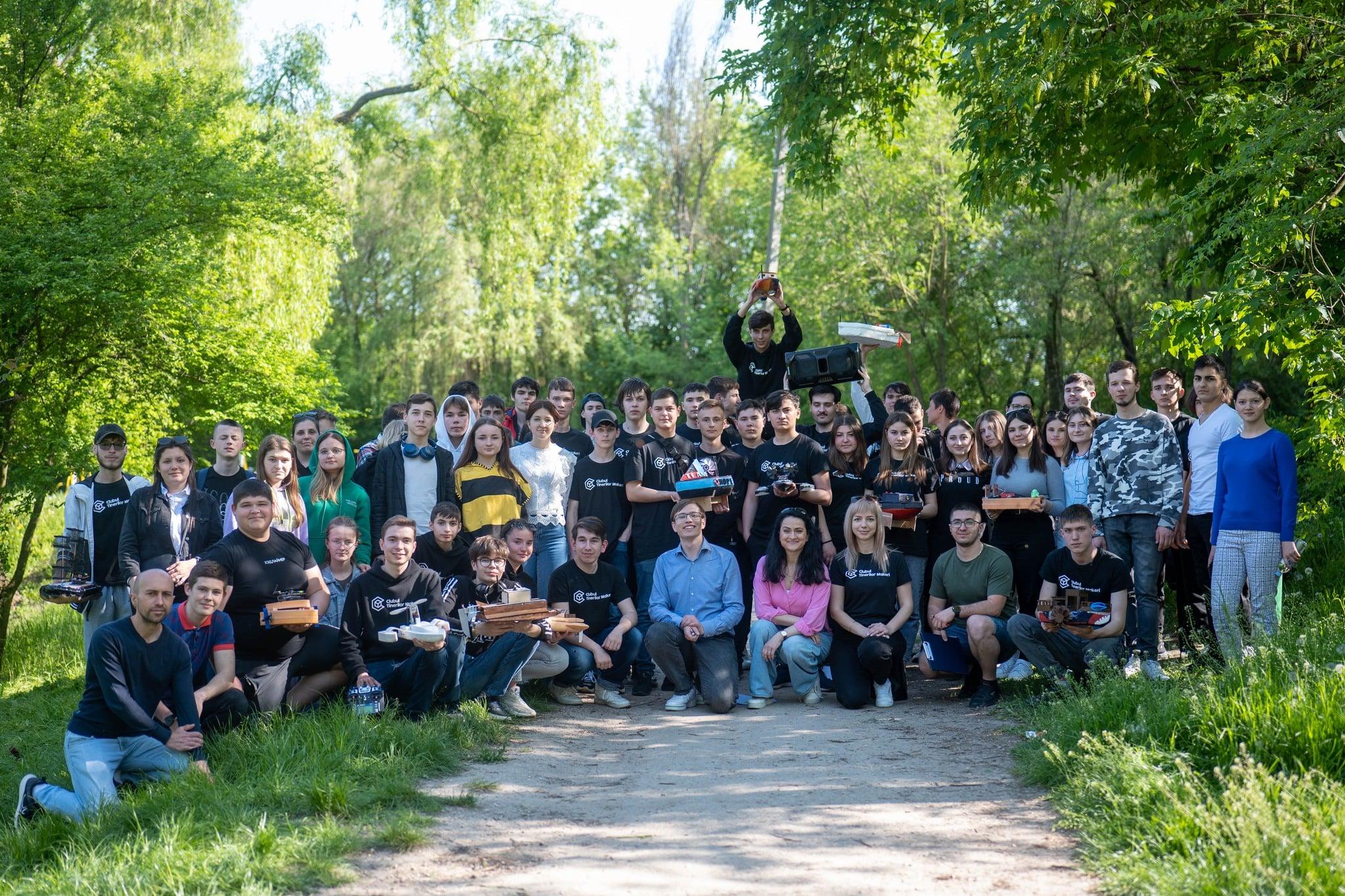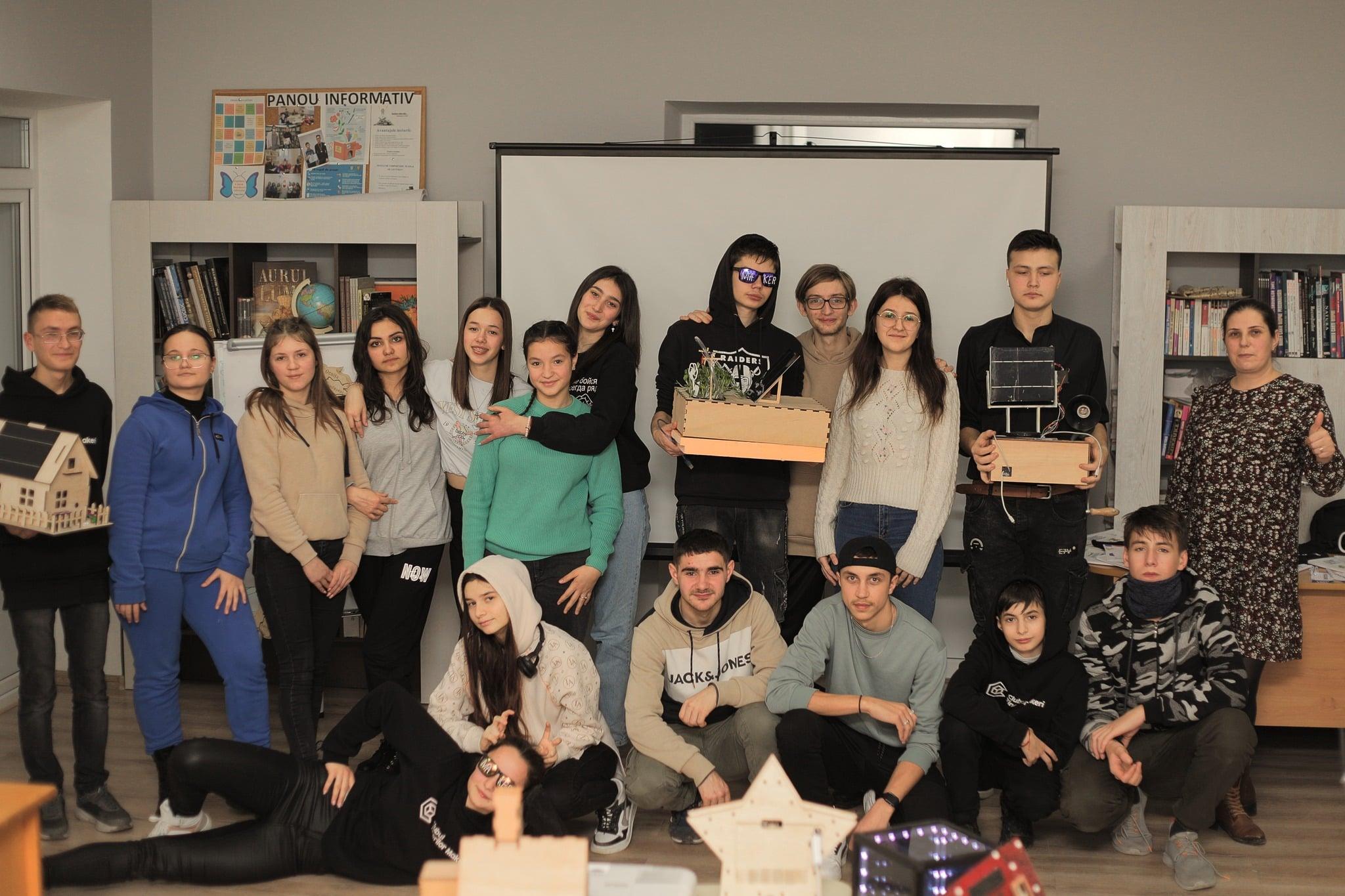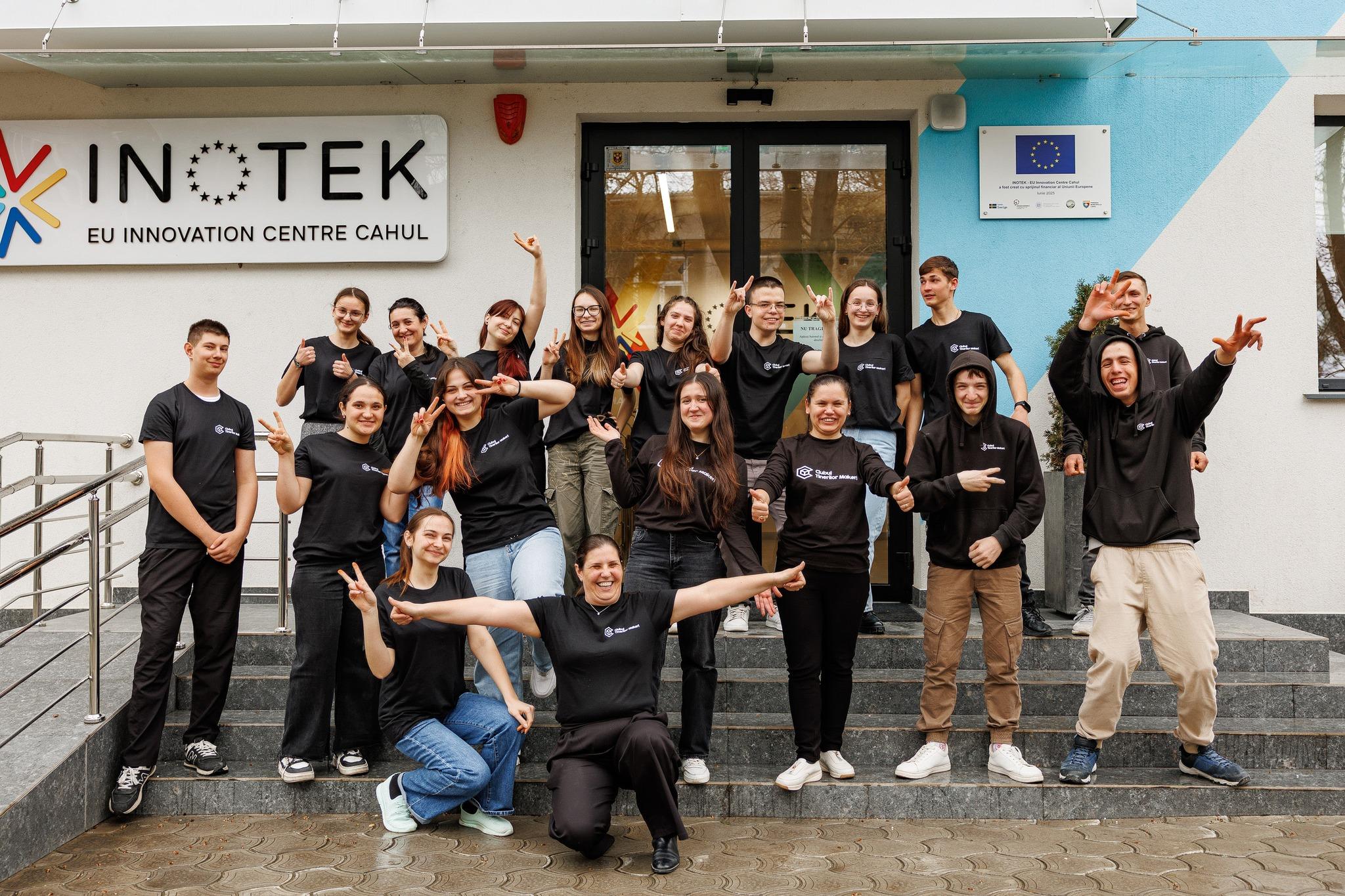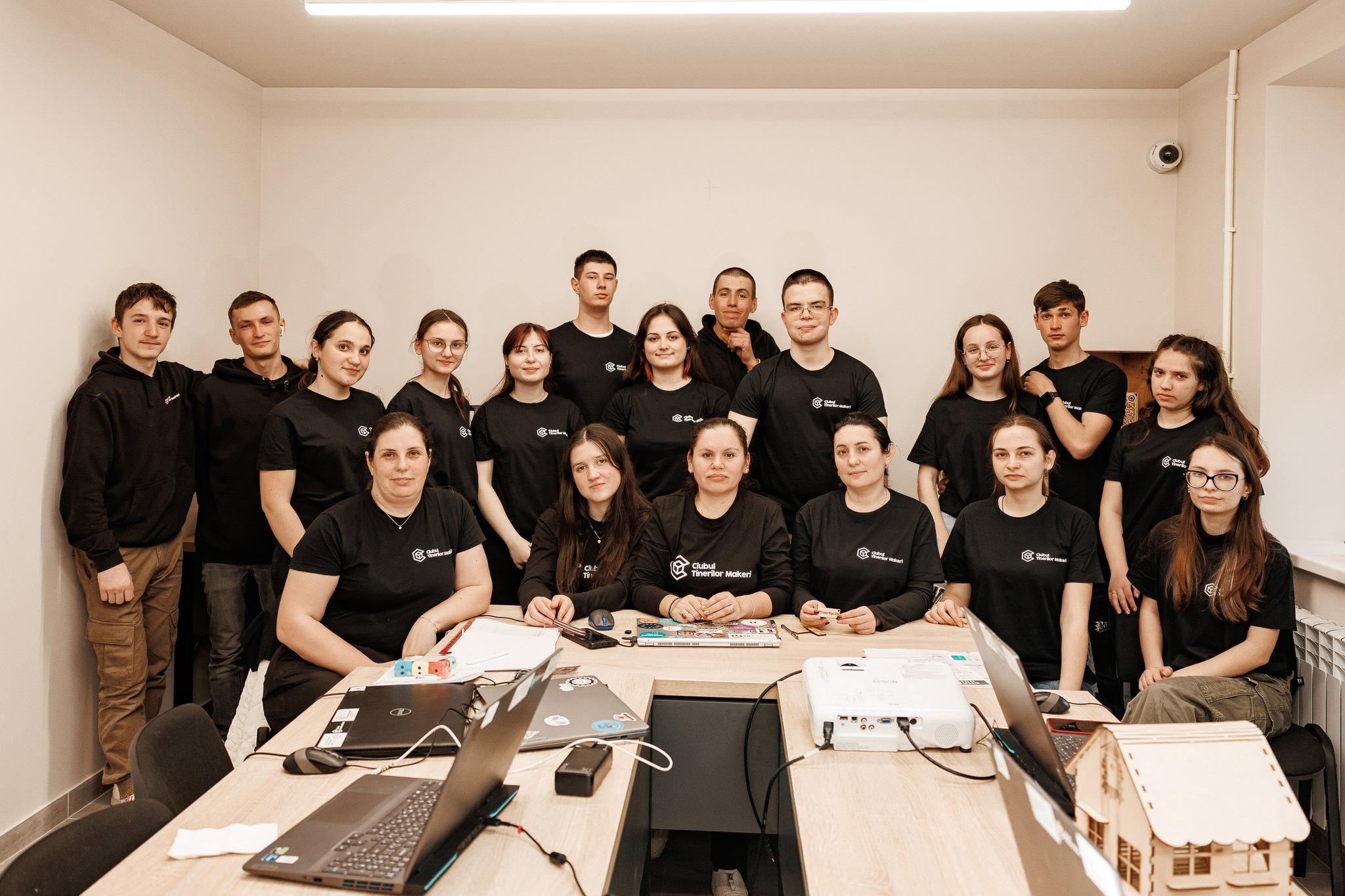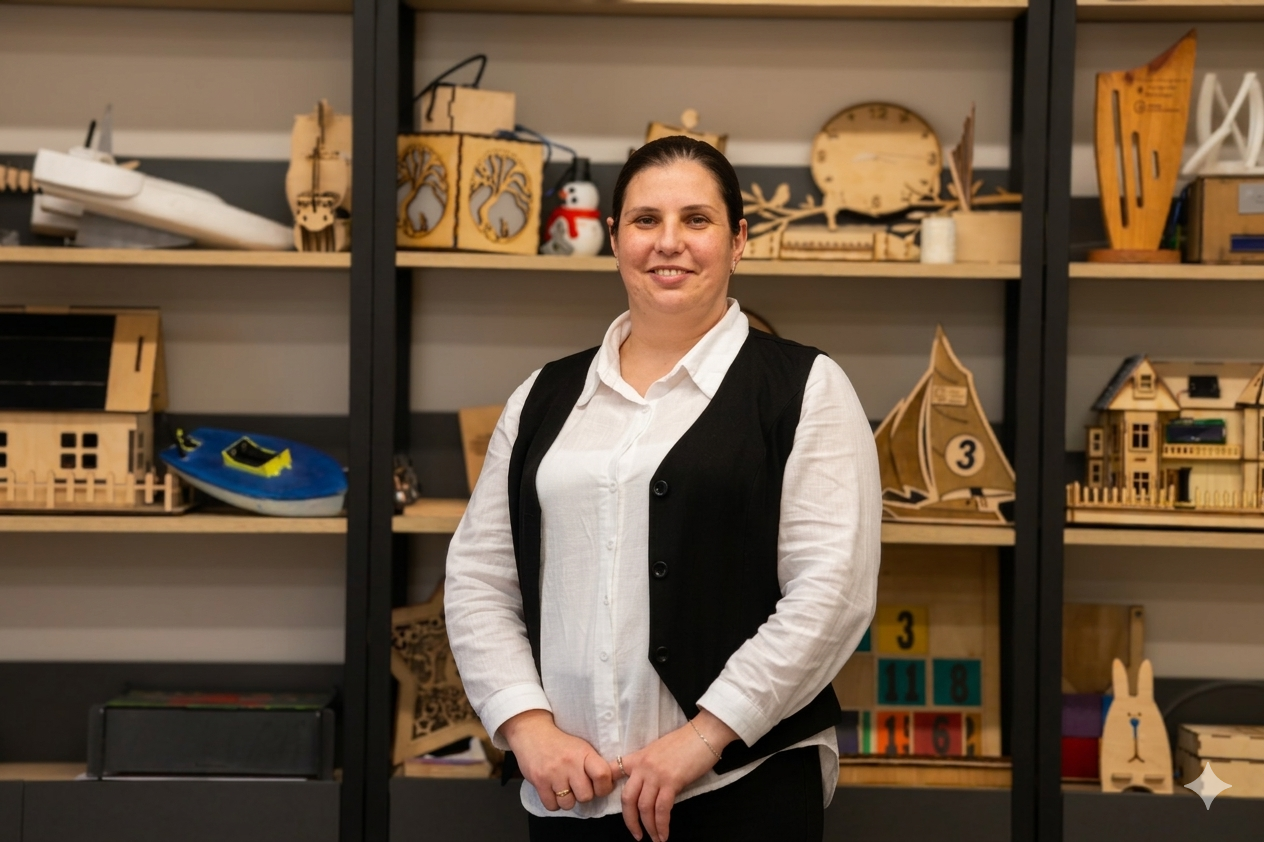
There are people who bring change to their communities. Natalia Lupu is one of them. Through her involvement in technology education and her role as coordinator of the Young Makers Club in Cahul, she contributes to shaping a generation of young people who learn to create, experiment, and trust their own ideas. In this interview, we explore her journey, the challenges she has faced, and the impact she has on young people in southern Moldova.
Ms. Natalia, could you briefly introduce yourself and tell us about your professional journey and how you became involved in technology education, particularly in coordinating the Young Makers Club?
My name is Natalia, and I am the local coordinator of the Young Makers Club in Cahul. My professional path has always been closely connected to working with children, education, and the desire to bring useful and modern activities closer to our community.
My involvement in technology education began back in 2017, following a call launched by the Novateca program to develop an innovative community center in Cahul. At that time, I had the opportunity to work alongside Ms. Rodica Dermengi, and together we wrote the project proposal aimed at bringing this center to Cahul. Fortunately, we succeeded, and that outcome was very important for our community.
As part of this process, I also took part in study visits to Kyiv and Odesa, where I saw best practice examples and gained a deeper understanding of how such spaces can support the development of young people and the community.
Later, in 2018, I began coordinating the activities of FabLab Cahul within the “Grigore Vieru” Children’s Library. That’s when we started building closer collaborations with colleges, high schools, and other educational institutions in Cahul. Through these partnerships, we managed to bring technology closer to children and young people and offer them the chance to learn through hands-on practice.
While at first concepts like 3D modeling, 3D printing, or laser cutting seemed complex to many of us, over time we realized they actually open up countless opportunities for creativity, innovation, and practical learning. In 2021, during the pandemic, I came across the announcement for the YMC coordinator position and felt it was the right opportunity for me, so I applied.
What initially motivated you to dedicate yourself to this initiative?
What motivated me most was the desire to create more learning and development opportunities for young people in Cahul. In 2021, I was a participant in the Startup City Cahul program, where I took a copywriting course, and that experience helped me better understand the value of innovative educational programs.
At the same time, I was already familiar with the work of the Tekwill and FabLab Chișinău teams, and I admired how they managed to bring technology, creativity, and education closer to young people. For me, this initiative was also a way to continue what I had started with FabLab Cahul, but in a new format, adapted to young people.
What was the most challenging moment in your role and how did you overcome it?
The most challenging period was the very first year of activity within the Young Makers Club, as we started our courses during the pandemic. It was a difficult time for everyone, and even more so for us, because the club’s activities are largely based on hands-on work.
We learn by doing—by creating, testing, and working directly with equipment—and this was very difficult to replicate online. We had to quickly adapt, find solutions, and keep young people engaged during a time of uncertainty.
It wasn’t easy, but we managed to move forward thanks to the support of our colleagues and managers in Cahul, for which I am very grateful. Their support made a significant difference and helped us overcome many challenges.
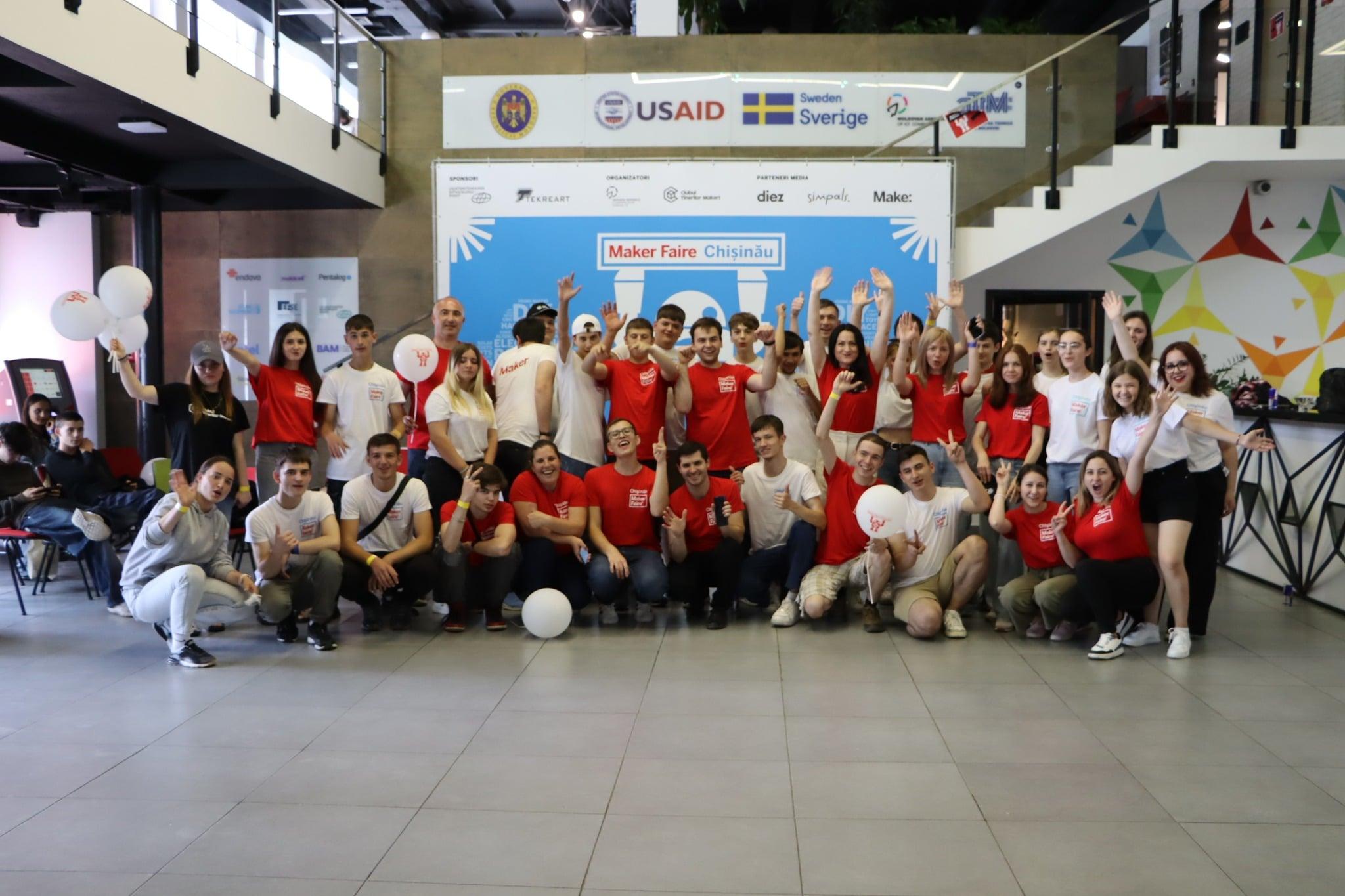
An important moment that showed me our efforts were worth it was when we managed to take 100 young people—students from vocational schools and colleges in Cahul—to the annual Chișinău Maker Faire festival. For me, that was a major achievement, proving that despite the early challenges, we succeeded in building an active and engaged community.
How has the vision of the club evolved since its launch, and what achievements are you most proud of?
The Young Makers Club in Moldova was launched in 2019, and since then its vision has steadily evolved. While initially the focus was on introducing young people to new technologies and practical learning, today the club has become an important space for both personal and professional development.
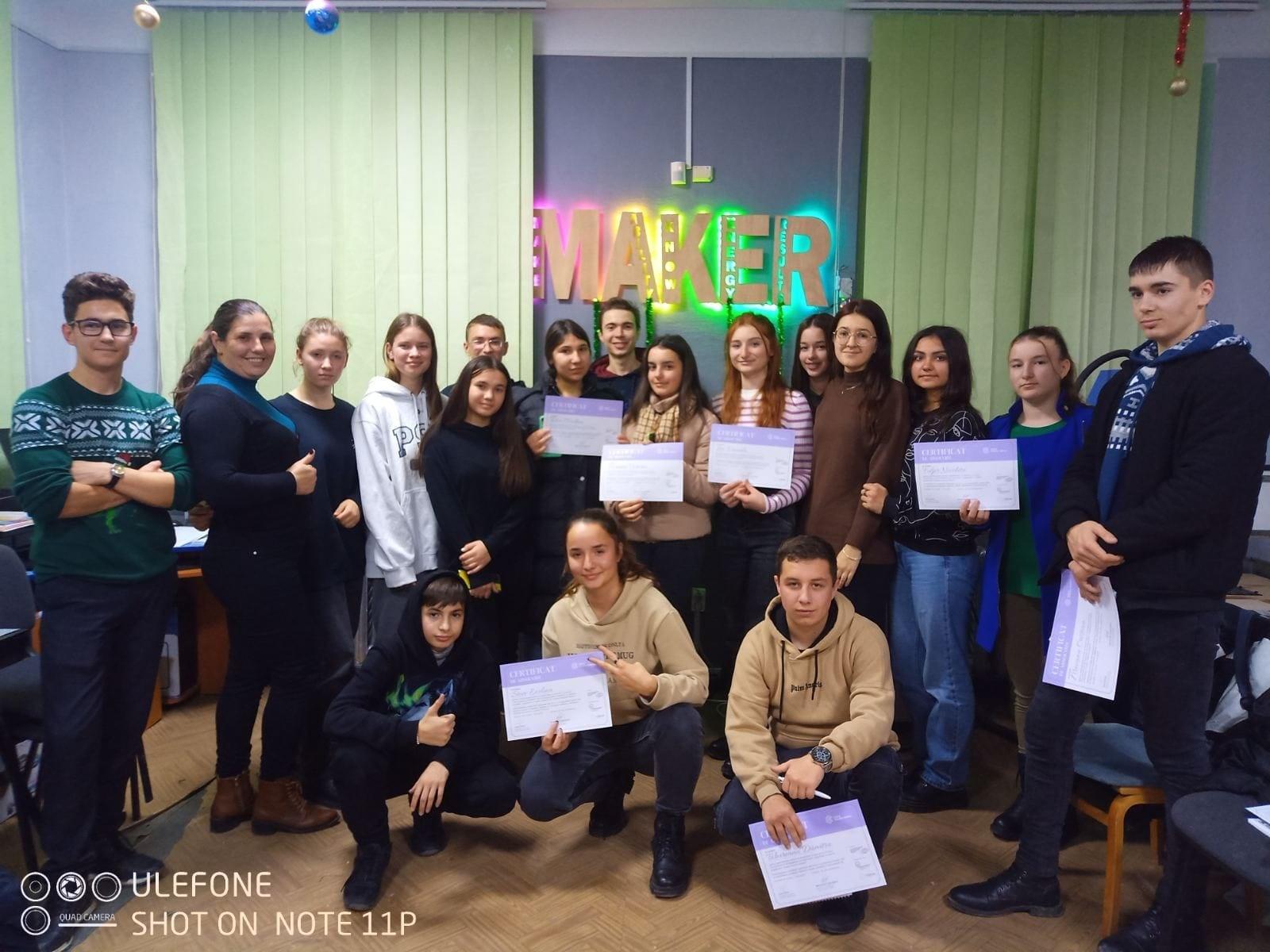
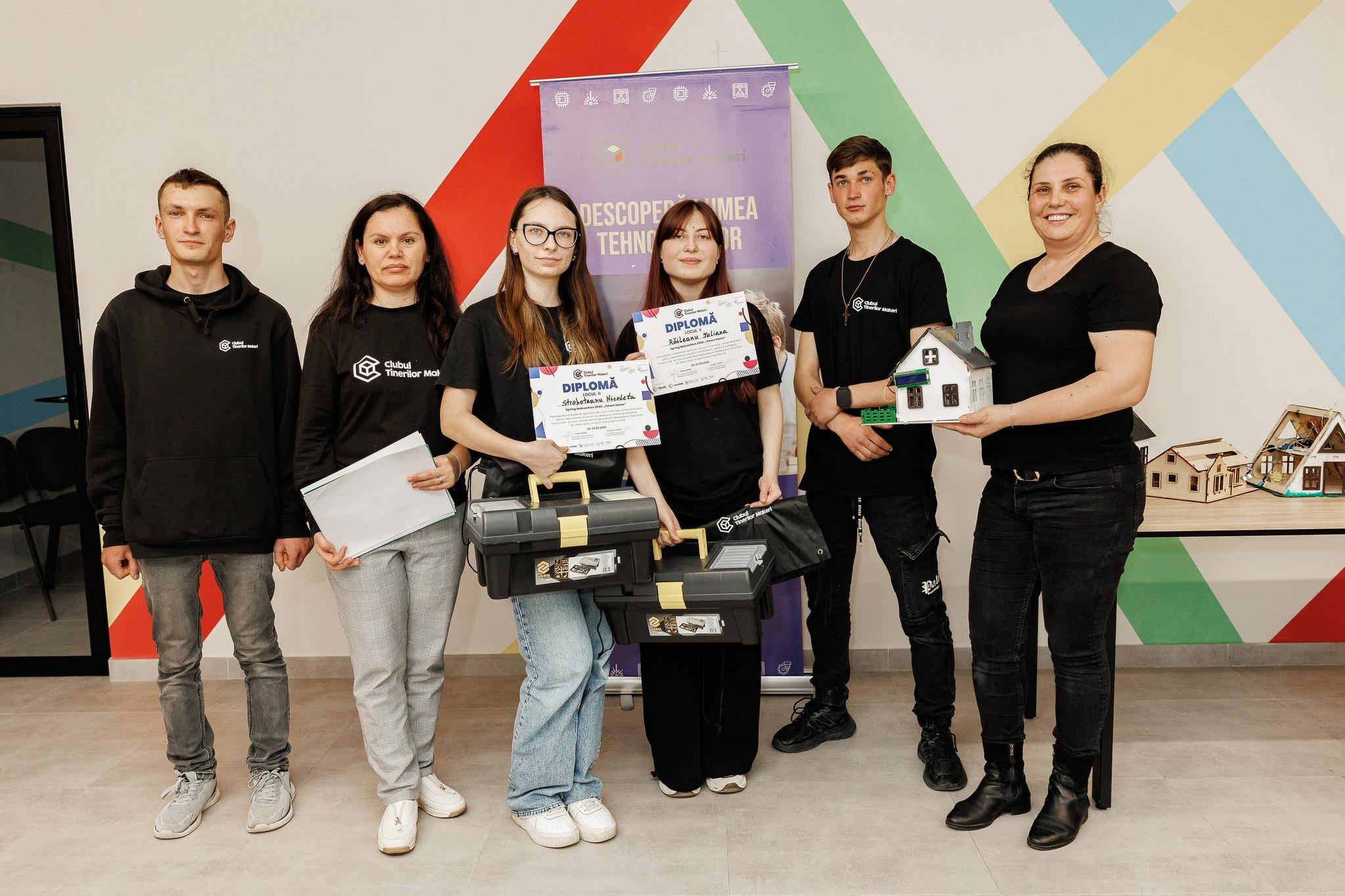
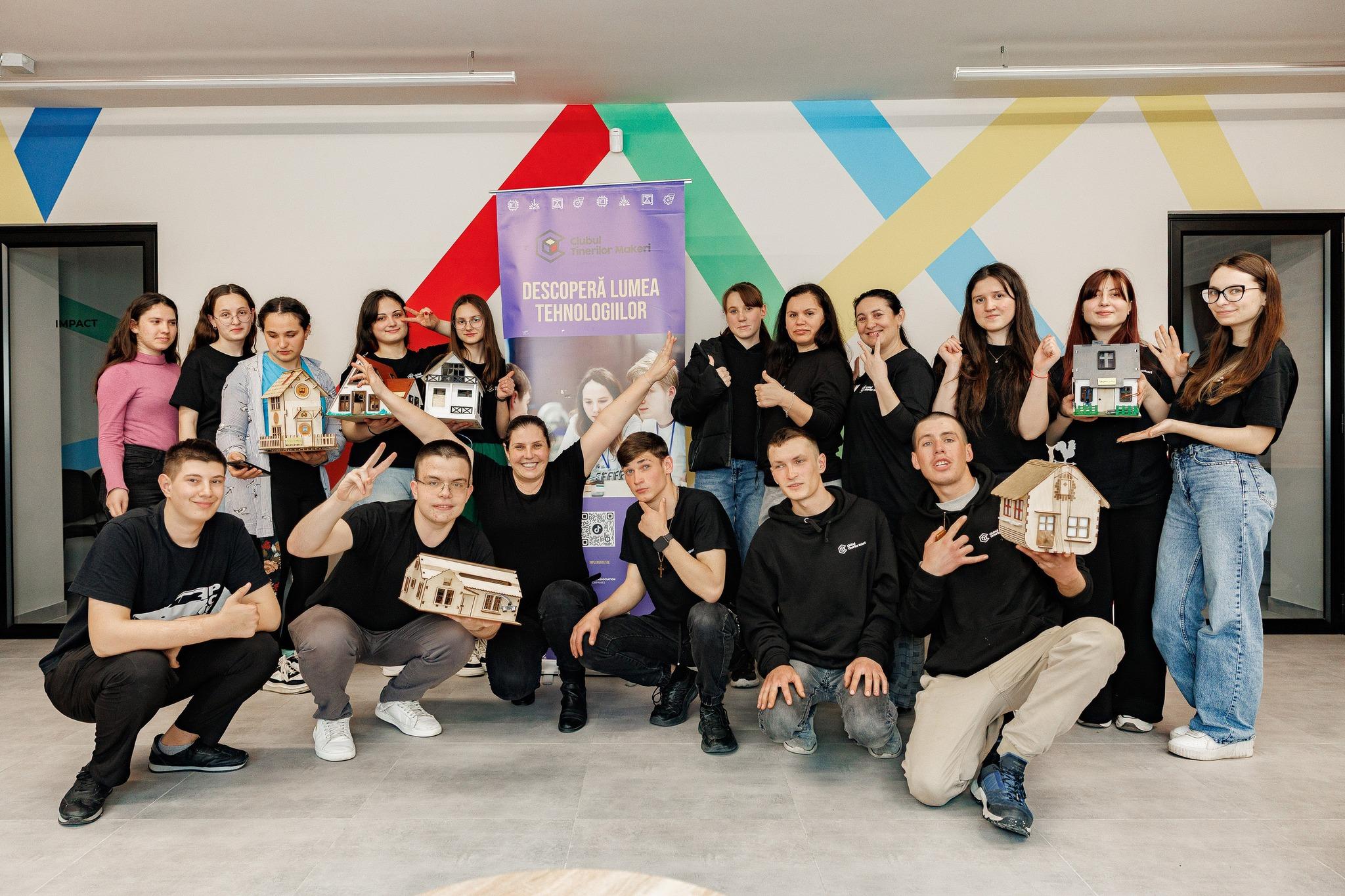
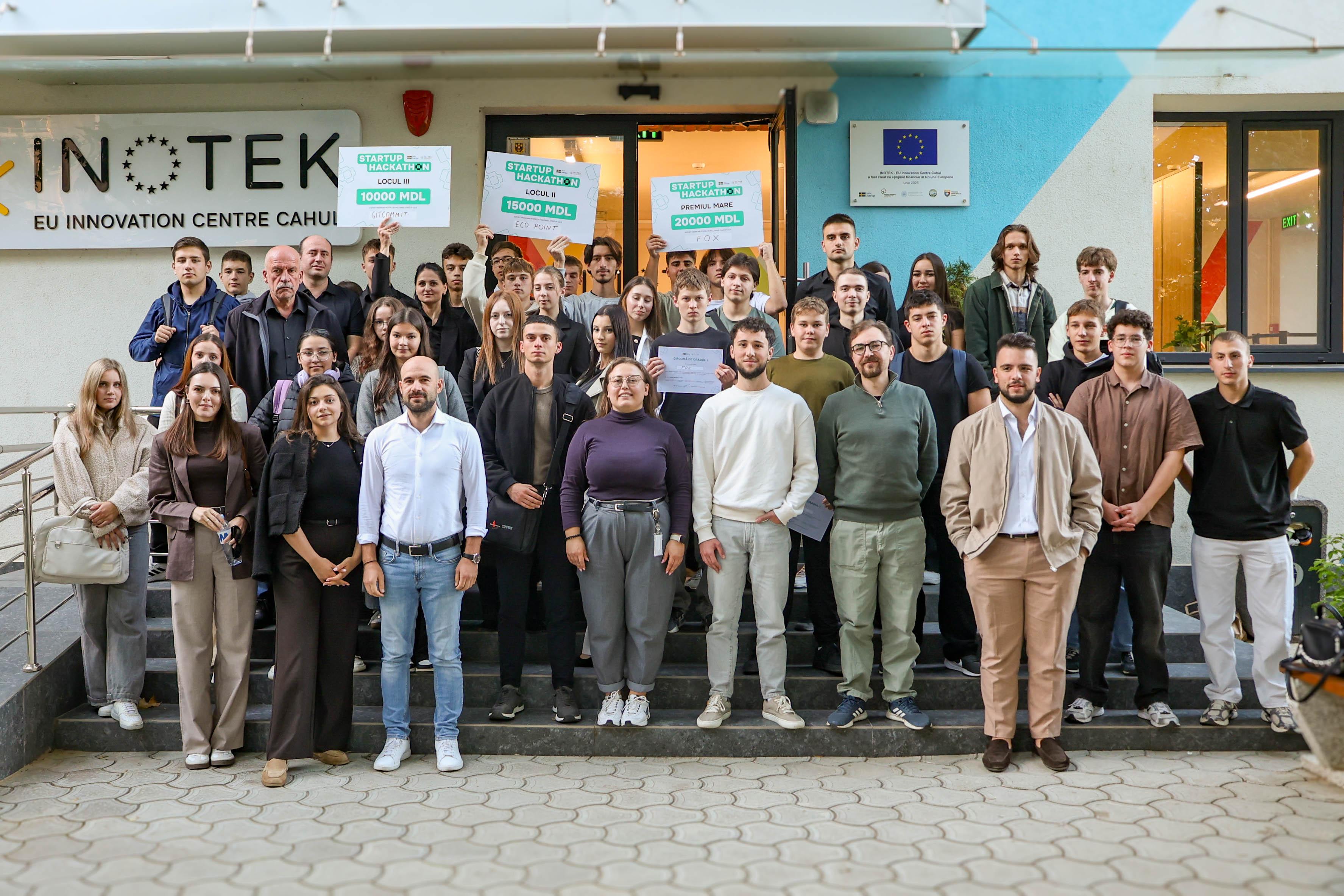
In Cahul, one of our greatest achievements is the number of graduates we now have. This shows that the project has continuity and a real impact in the community. Even more importantly, after completing the courses, our makers have the opportunity to move forward and participate in makeathons, where they apply their knowledge, work in teams, develop ideas, and build prototypes.
I believe this is one of the most valuable aspects of the club, as it helps young people move from learning to application—and toward performance.
For me, the Young Makers Club is a highly valuable initiative because it gives young people the chance to learn through practice and better prepare for the future. It’s not just about courses—it’s a space where they can explore new technologies, experiment, create, and better understand their own interests and abilities. At the same time, it helps them gain clarity about their professional path and build confidence in themselves.
My greatest pride is seeing how the young people who go through this program grow—becoming more confident, more creative, and more self-assured. That’s when I truly understand that our work has meaning and that this project genuinely contributes to shaping a generation better prepared for the challenges ahead.
What impact has the Young Makers Club had on participating youth, especially those from vocational and technical education institutions? Do you have any “success stories”?
The goal of the project is to support young people in vocational and technical education in becoming better prepared for employment by developing their technical, digital, and even personal skills. This is important because today employers are looking not only for theoretical knowledge, but also for practical abilities, initiative, teamwork, and problem-solving skills.
For Cahul, the project has a special importance, as it provides young people with access to modern learning opportunities right in their own region. It is essential that they can benefit from such experiences without having to move to another city. At the same time, the project has helped build a local community of active, curious young people interested in technology and development.
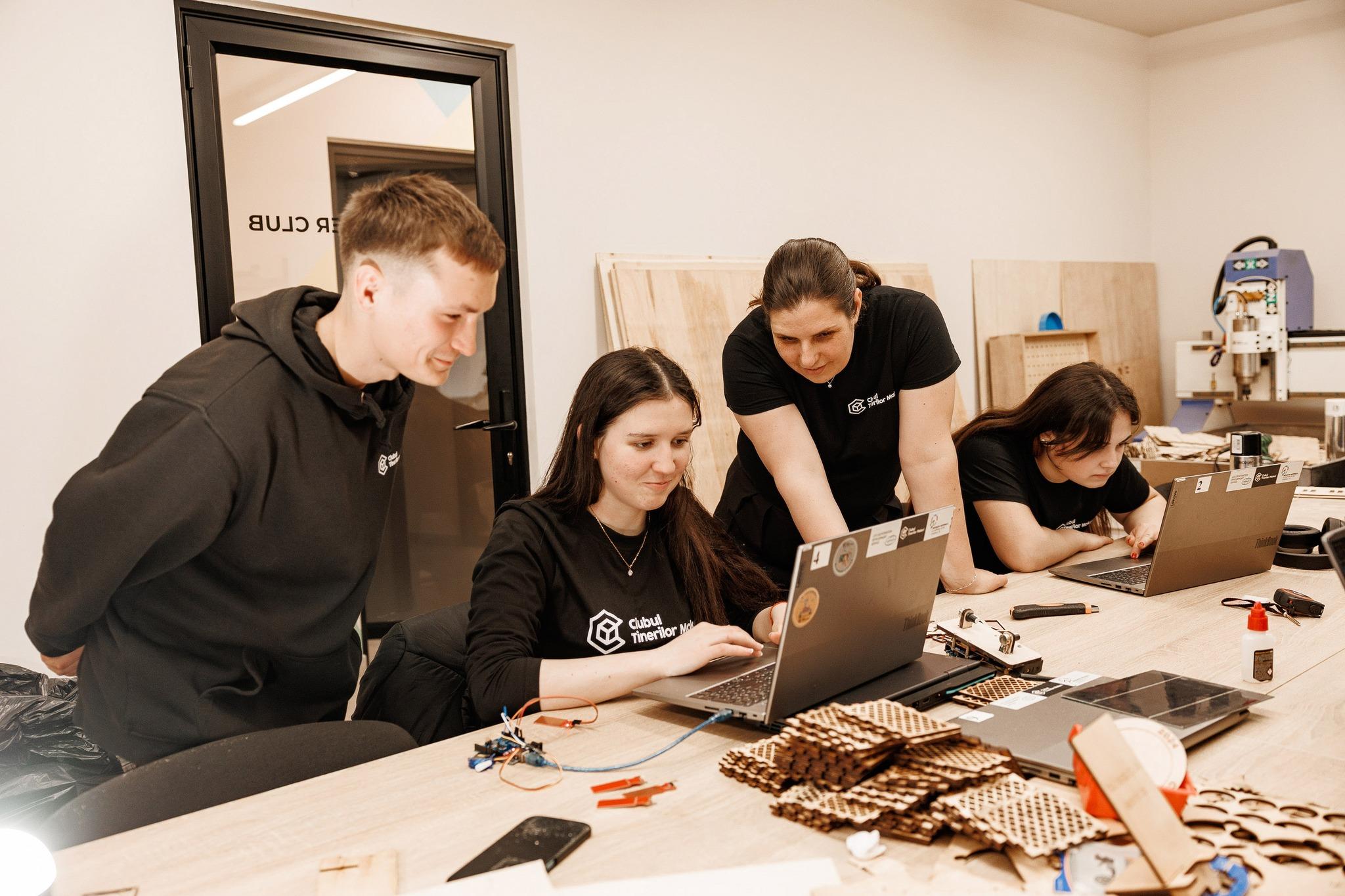
Within the Club, participants have access to hands-on courses in highly relevant fields such as 3D printing, laser cutting, CNC, robotics and mechatronics, drones, electronics, and programming. Through these activities, they not only learn new skills but also gain confidence in themselves and in what they are capable of achieving.
Looking ahead, what are your main aspirations for the Young Makers Club by 2027 and beyond?
Looking to the future, I want the Young Makers Club to continue growing and to reach as many children and young people in Cahul as possible. By 2027, I hope we will engage even more participants, strengthen collaboration with educational institutions, and offer young people a space where they can learn through practice, create, and build confidence in their ideas.
I also want the club to remain a place where young people not only learn about technology but also discover their passions and define their professional direction. I would love to see more graduates who go further, take part in makeathons, develop projects, and turn what they have learned into real opportunities.
Beyond 2027, I hope the Young Makers Club will remain a strong, sustainable, and valuable initiative for the community—a place that continues to inspire new generations to learn, create, and believe in their potential.
What advice would you give to young people who are just starting to explore the field of technology?
I would encourage them to ask questions, not be afraid to express their ideas, and have the courage to promote them. Today there are many opportunities—makeathons, hackathons, and competitions—where they can present their ideas and turn them into real projects.
At the same time, I would advise them to take advantage of every free learning and development opportunity, because each such experience helps them grow, gain confidence, and discover new directions for their future.
Why do you think practical technology education is so important for young people in Moldova?
It is important because it helps them better understand the world we live in and prepares them for the future. Today, technology is present in almost every field, and young people need not only theoretical knowledge but also hands-on experience.
Through these activities, they learn to create, experiment, solve problems, and think more creatively. At the same time, they build self-confidence and gain a clearer understanding of their professional path.
For young people in Moldova, this type of education is especially important, as it opens up new opportunities, brings them closer to innovation, and helps them meet the demands of a constantly changing world.
Thank you, Natalia, for your time.