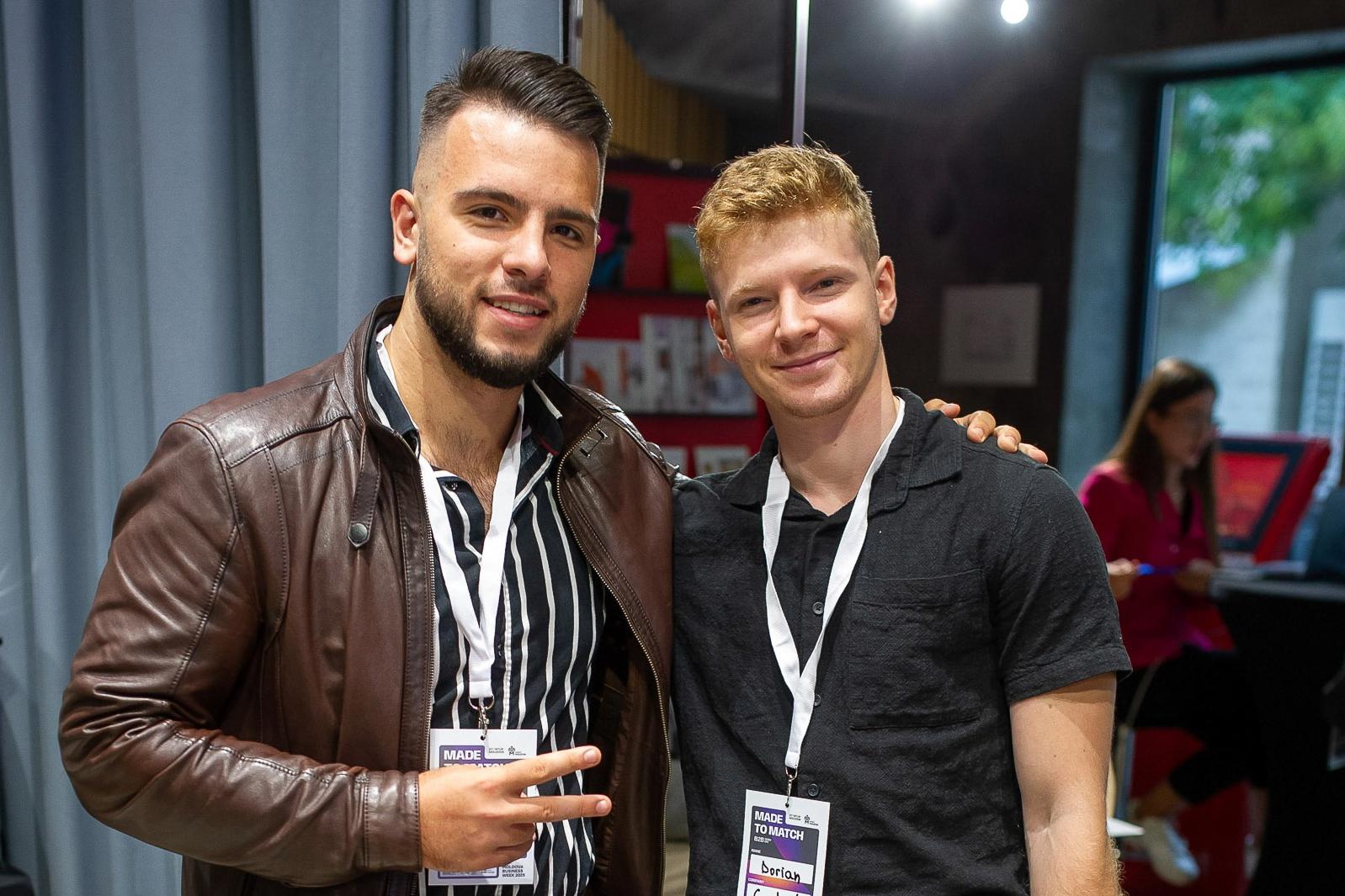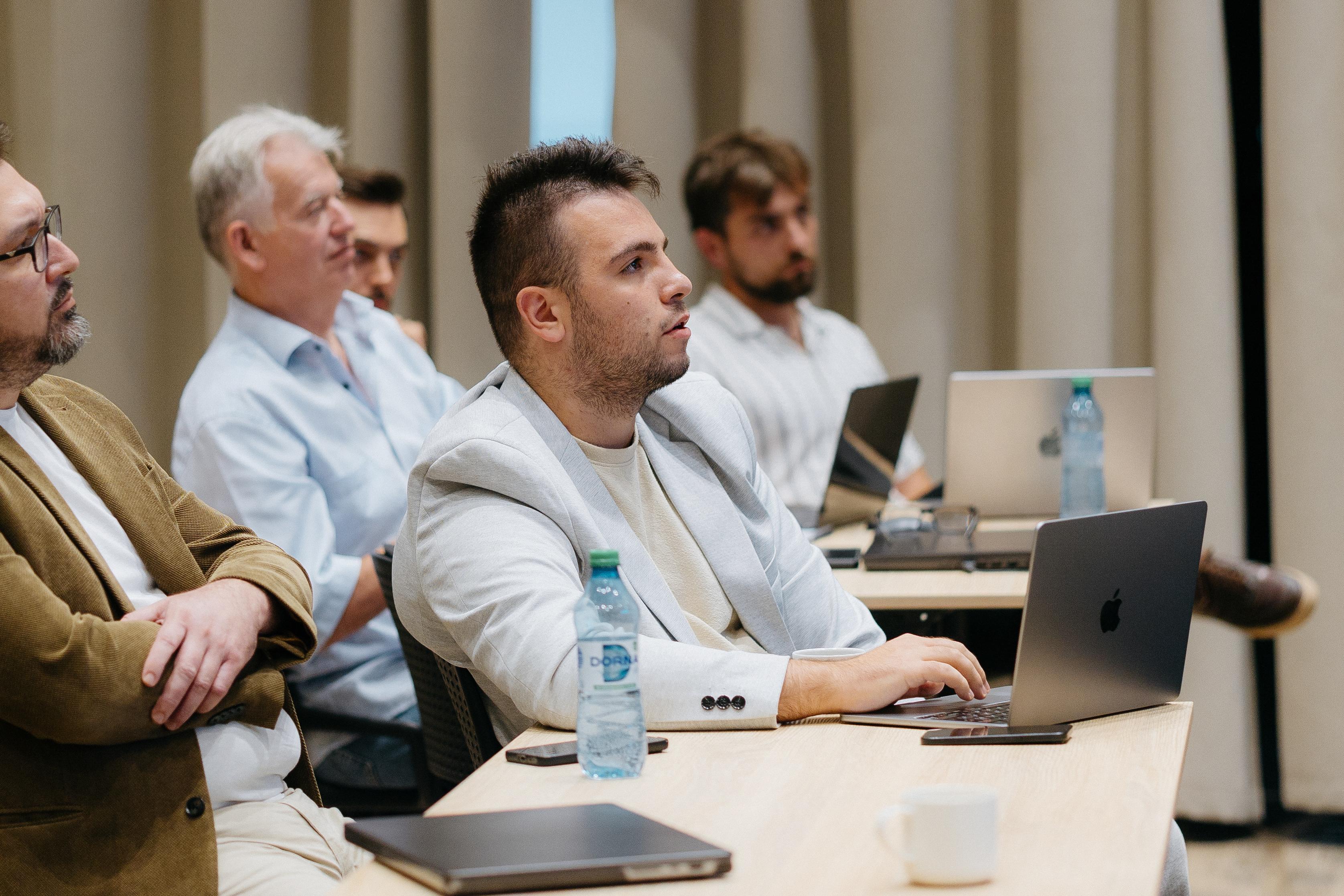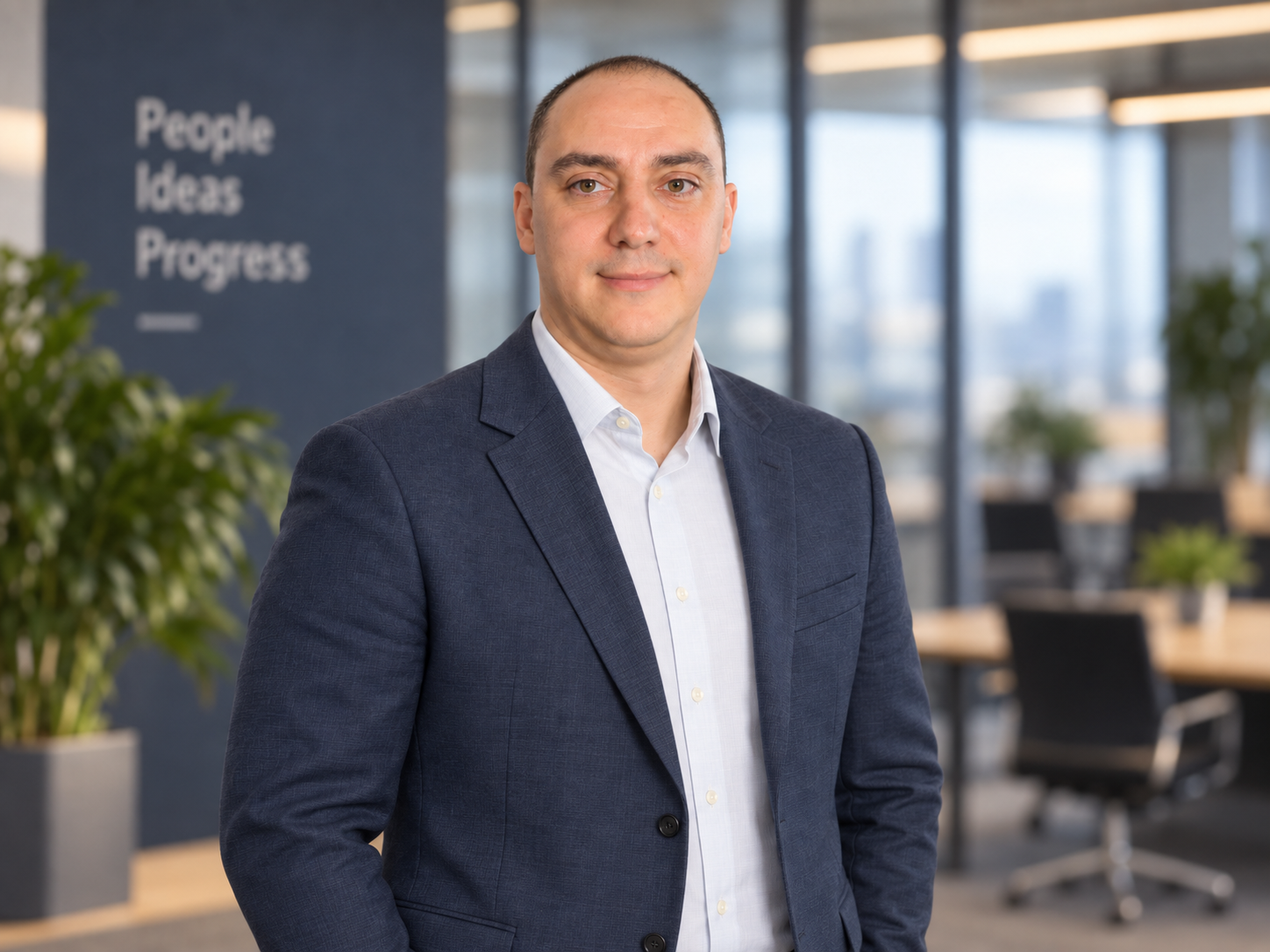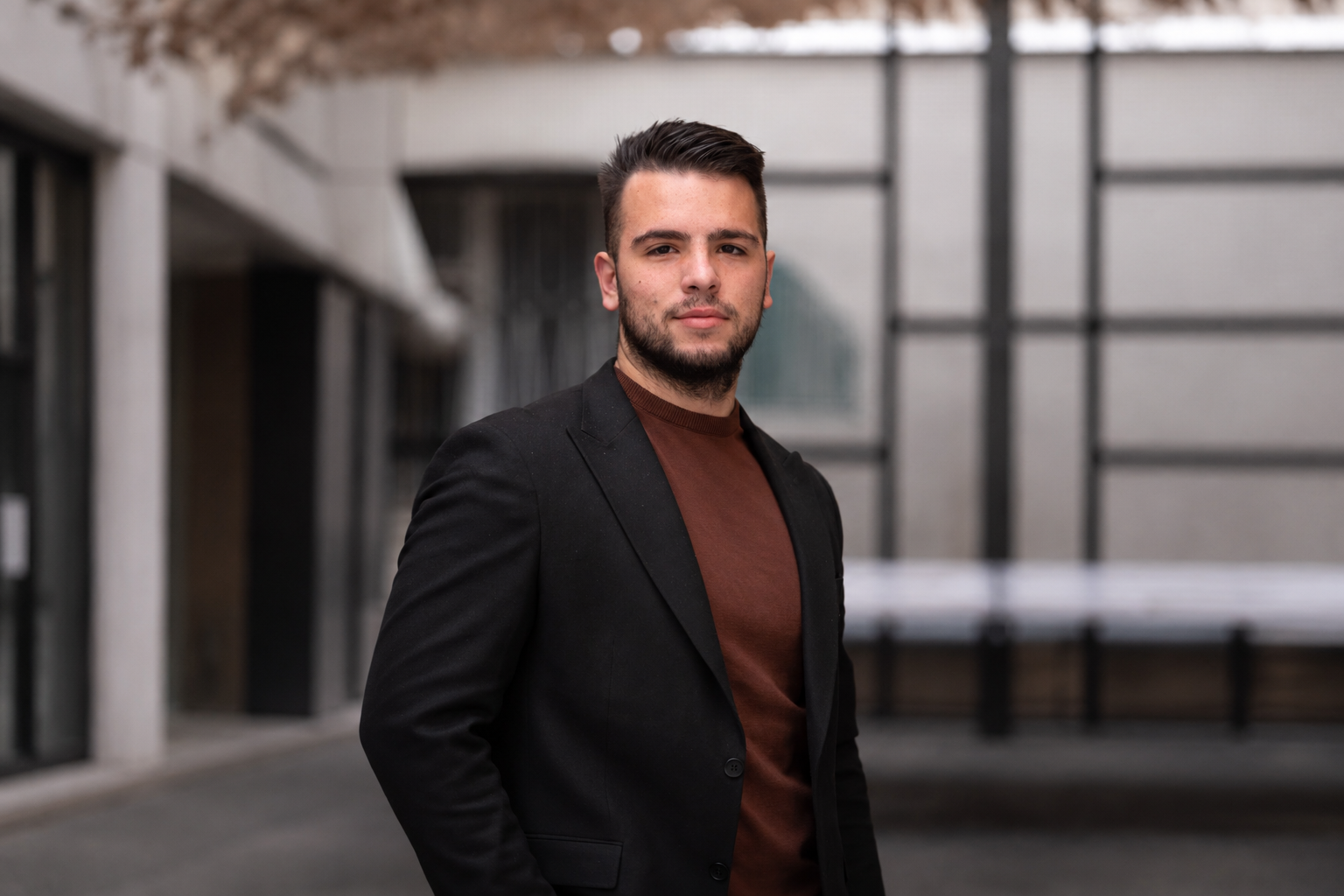
Nicu Cociorva is 21 years old. Originally from Leova, he is a third-year student at the Technical University of Moldova and an entrepreneur. His interest in technology began in childhood, and as a teenager, he discovered artificial intelligence by watching machine-learning models being developed for self-driving cars.
Since then, he has worked on dozens of projects. Some have grown, while others remained experiments, but each one has contributed to his professional development. Today, Nicu manages and develops Clone AI, a company that creates automation solutions and AI-powered “virtual employees.” He is also involved in developing aibani.md, a product that helps entrepreneurs access funding, and Iris, a cybersecurity solution.
A conversation about innovation, lessons learned from failure, and the power of community in entrepreneurship.
Nicu, how did your early years in Leova shape your ambition and the way you approach your projects today? Were there any people or moments from that time that had a lasting impact on you?
Leova is a very small town, and since I was constantly consuming content from the United States, I became increasingly aware of just how small it was. That made me start looking elsewhere in Moldova for people who had built much bigger things. I have always been drawn to people who aim as high as possible, although I never had a fixed set of criteria or a handful of specific role models. I was always trying to understand what the people I looked up to had focused on and which pivotal moments had helped them get where they were.
As for the people who have influenced me, I do not think there is a fixed number. I believe that everyone I have interacted with—even if it was only for five minutes, once in my life, at a networking event—has had an impact on me.
Looking at the field you work in today, where did your fascination with technology begin?
Technology fascinated me from an early age. I took part in every project I could access, and things developed naturally from one project to the next. Around the ninth grade, I realized that software was what interested me most. From that point on, I knew that this was what I wanted to do for the rest of my life.
My journey with artificial intelligence began in 2016, when I came across YouTube videos showing people building machine-learning models for self-driving cars. I was fascinated by the idea that something could learn on its own. Even though I was young, I could already sense the field’s enormous potential. I began seriously studying AI and machine learning in the eleventh and twelfth grades, and that shaped the direction I took. During my first year at university, I saw how much potential there was in the market and decided to start my own company.
Many young people come up with ideas at university, but few start a company in their first year. What motivated you to stop waiting and take action?
The thing is, starting a company is easy. What matters far more is the project you want to develop and the people involved. Before launching this company in my first year, I had already worked on many other projects, going all the way back to high school. Once our services began gaining traction, we officially registered the company.
What does a typical day in your life look like, and how do you balance university with entrepreneurship?
Most of it revolves around work, calls, and long evenings spent with the team—brainstorming and talking to other people. It means sacrificing parts of your personal life: evenings with friends and time with your family. At university, I try to get as much as I can out of the time I have, and I work during breaks while waiting for the next class to begin. But it is only a temporary phase.
Before Clone AI, what other projects did you work on, and what did you learn from them?
Before Clone AI, there were dozens of projects. To name just a few, there was AEGI, an AI-based cybersecurity product that performed continuous scans and helped companies identify vulnerabilities and critical weak points. Before that, there was CoffeeConnect, where we built a small community that gave people the opportunity to develop their own passion projects. Our vision was to create a company with hybrid departments that could launch products on a continuous basis, increasing the chances that at least one of them would succeed.
I also developed media automation tools, systems that helped companies extract insights and support their sales teams, a “second brain for business,” and many other things. Every project taught me something, but I learned the most from the people I developed them with. I strongly believe in continuous learning. For me, formal education and self-directed study go hand in hand, and every project I have worked on has also been a stage in my development.
Today, your efforts are focused on Clone AI and concepts such as “virtual employees.” For someone outside the industry, what does that mean in practical terms, and how does it change the way a company operates?
A company needs people and their know-how. At the same time, much of those people’s work involves handling operations and execution. Technology, however, allows us to create what we call “virtual employees,” who take care of the execution side. These employees can be cloned as many times as necessary to complete a task faster and to a higher standard.
Of course, some people cannot be replaced. For them, we create what we call “assistants,” which allow them to work faster or help them produce better-quality results.
From the outside, your journey may appear to have progressed very quickly. What remains unseen behind that progress, and which moment tested you the most?
I do not think it has been particularly fast, especially compared with the goals I have set for myself. Even so, what lies behind it is simply a tremendous amount of work, travel, and a results-driven mindset: rapid iterations and fast but carefully calculated changes, always while thinking three steps ahead. We have constantly asked ourselves how we could achieve seven, twenty, or one hundred times more with the same resources—and how we could do it as quickly as possible.
In our conversations, you mentioned that “technology changes, but people remain.” How does this belief influence your decisions and the way you lead your team?
Professionally, I prefer to be pragmatic. Decisions must be analyzed very carefully. I am not looking for quick fixes, but for sustainable, long-term solutions. Another important lesson is that people are the most valuable resource. Technology changes from one year to the next, but people remain, which is why I invest just as much in relationships as I do in products. The list of lessons goes on and will continue to be written throughout my life.
On a personal level, I believe we should be more understanding, more empathetic, and more connected to ourselves. We should do what we genuinely feel is right and avoid making decisions based on imaginary standards or ego.
Beyond technical skills, what do you value most in a business partner or team member?
In general, a partner—regardless of where they are in life—must be prepared to contribute a fair share of resources, and I do not mean money, as well as know-how. They must also be aligned with the vision, among many other things. When it comes to the team, I think it is essential for everyone to be aligned in terms of values, personality, skills, and the desire to grow.
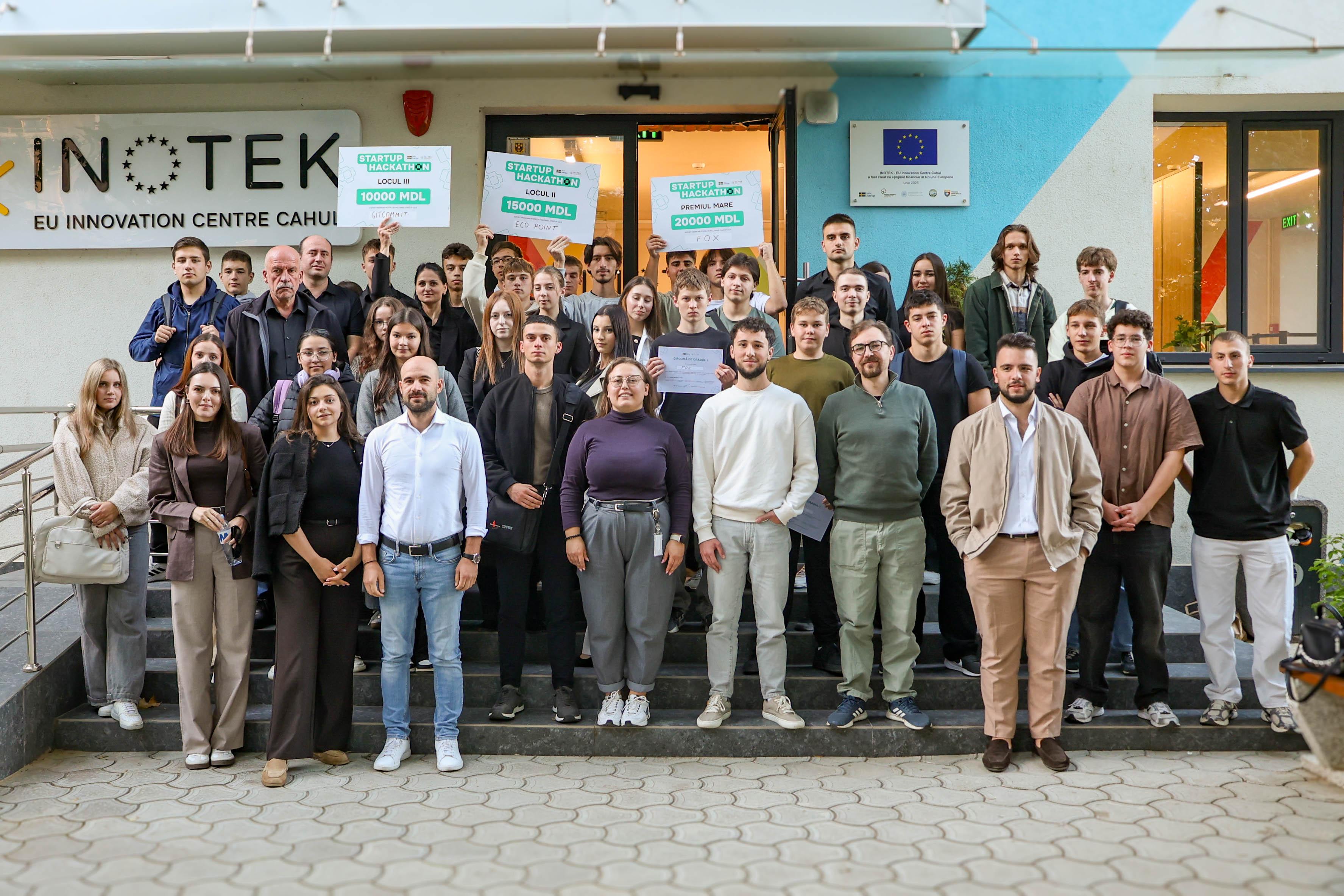
You have taken part in regional initiatives and hubs such as INOTEK. What does access to these innovation communities offer young people outside the capital?
I think the most valuable thing I gained was the opportunity to meet people.
What do you believe is the greatest barrier preventing young people in Moldova from launching their own projects?
I can only speak from my own experience and from what I have seen among the other young people I have worked with. Honestly, the greatest barrier is neither a lack of money nor a lack of skills. It is fear.
The fear of taking action—of starting before everything is perfect. The fear of selling—of saying out loud, “I built this, and I believe it has value.” The fear of knocking on a company’s door, sending the first message, or asking for a meeting. These things may seem small, but this is exactly where most people stop. It is not the technical side that holds them back, but the moment when they have to put themselves out there.
I think it also stems from an environment where making a mistake is treated as something shameful rather than as a natural step in the process. We grew up asking ourselves, “What will people say?” and being taught that having a stable job is safer than trying to build something of our own. Another issue is that we still have too few visible role models—too few people we can look at and think, “They started where I am now.” When you cannot see the path someone else has taken, it can feel as though that path does not exist.
There is something else as well: many young people here think small because they only consider the local market. But the reality in 2026 is that a young person in Chișinău can work with a client in Berlin or Austin just as easily as someone in Warsaw can. Geography is no longer the barrier; mindset is. If you limit your ambition to the scale of a city with half a million people, that is where you will remain. If you set your sights on the global market, at least you give yourself a chance.
What I have realized, however, is that fear never goes away. You never reach a point where your hand no longer trembles before you press “send.” You simply learn to take action despite it. The first “no” hurts. The tenth becomes information. By the hundredth, you no longer even remember it. Everyone I admire today went through the same phase. The difference is that they kept knocking on doors.
That is why I ultimately do not believe talent is what separates people. There is plenty of talent in Moldova. I have met extraordinary young people who have never launched anything. What separates people is whether they move past their fear or allow it to stop them. The good news is that this is not something you are born with. It is a choice you make from scratch, every single day.
Moving from barriers to action, what advice would you give to people who keep putting things off or are afraid to take the first step?
Honestly, I do not know whether I have enough experience to give advice. I am still in the middle of my own journey, and I have a great deal left to learn. I can only share what I have observed in myself and in the people around me.
What I have noticed is that it all comes down to how badly you actually want something. Not at the level of “it would be nice,” but at the level of “I cannot not do this.” Procrastination is often neither laziness nor pure fear—it is a signal. When you truly want something, you find an hour at six in the morning or two hours after work. When you do not, you find reasons. And it is perfectly fine to discover that you do not want it badly enough. It is better to realize that now than after wasting three years on a path that was never yours.
But if you truly want it and still keep putting it off, the only advice I feel qualified to give is this: take the smallest possible step today. Do not create a five-year plan or wait for the perfect strategy. Send one message. Make one call. Publish one page, even if it looks terrible. Motivation does not come before action—it comes afterward. You wait until you feel ready, but that feeling only appears once you have started, not before.
One more thing: give yourself permission to be bad at it in the beginning. The first version of anything is weak. That is normal; it does not mean you are not cut out for it. The difference between those who succeed and those who do not is rarely the quality of their first attempt. It is the number of attempts they make.
Other than that, do not wait for the fear to disappear or for the right moment to arrive. The “right moment” is a story we tell ourselves so we can postpone things for another week. If you truly want it, start badly, start small—but start now.