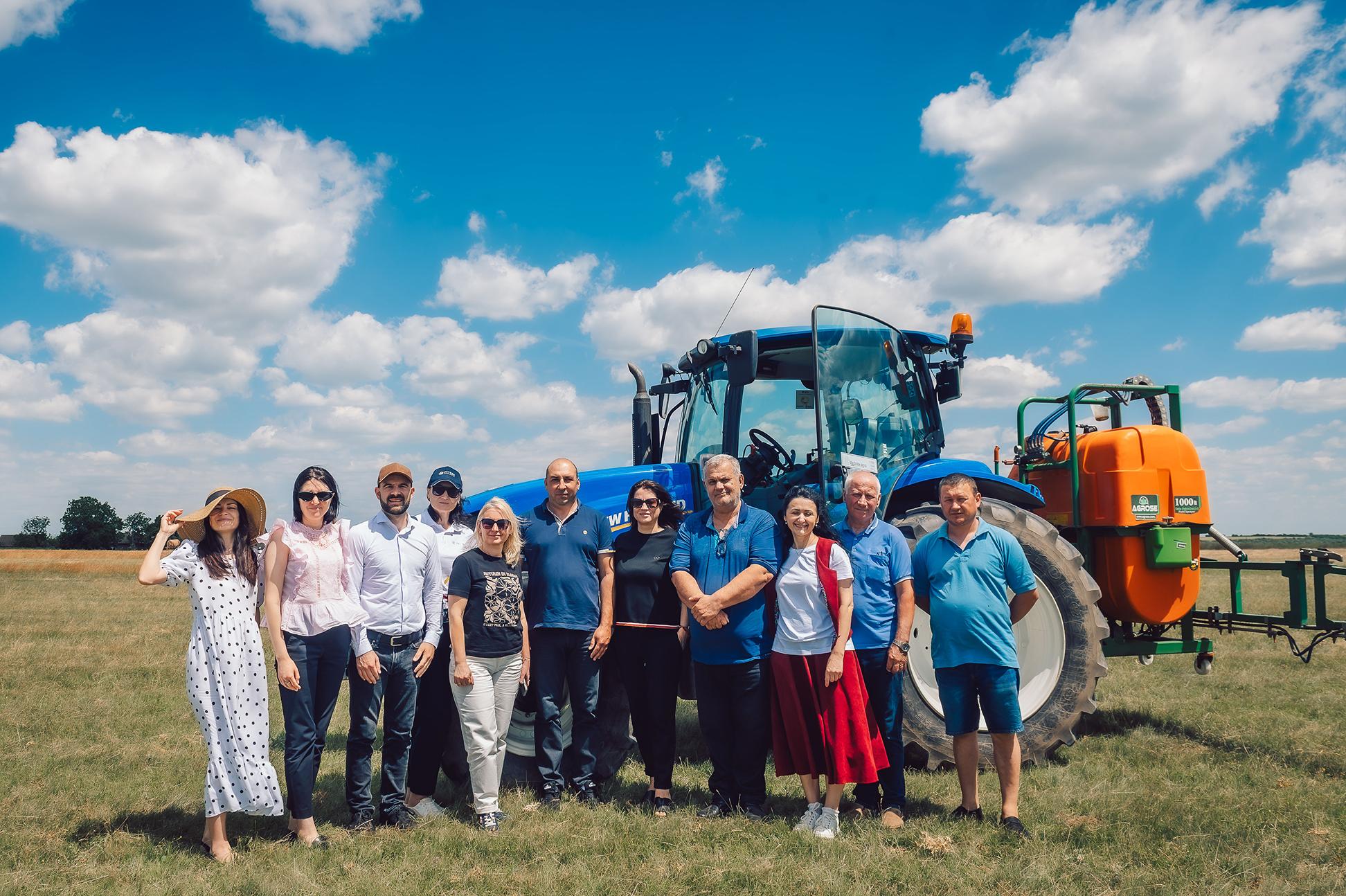
Four businesses from the Leova, Cantemir and Taraclia districts have implemented digital solutions for sales, customer management, cattle monitoring and farm operations. The companies completed a training programme, analysed their internal processes and subsequently became eligible for financial support of up to MDL 100,000 to implement the solutions they needed.
The solutions were implemented through Business Digital Start, a programme designed for small and medium-sized enterprises operating in non-technology sectors. The programme was delivered by the Inotek Centre in Cahul for entrepreneurs from southern Moldova.
“The Business Digital Start programme provided SMEs with exactly what is often missing from the digitalisation process: practical training, guidance and the opportunity to implement concrete solutions within their companies. This is how we transform technology from an abstract concept into measurable business results. The programme is fully aligned with the Inotek Centre’s mission to promote the digital economy, strengthen the competitiveness of the business environment and connect the people, ideas and resources that can contribute to the prosperity of the southern region,” said Nicolae Mocanu, Administrator of the Inotek Centre in Cahul.
The programme was launched in February 2026, attracting applications from more than 40 companies across the Leova, Cantemir and Taraclia districts.
“The German Government supports the Republic of Moldova on its path towards a more digital, competitive and innovative economy. This support is about more than adopting new technologies — it is about giving businesses in every region the opportunity to grow, become more resilient and connect with the European economy. Through the DT4SME project, implemented by GIZ, we support SMEs in turning everyday challenges into practical digital solutions. The experience of companies in southern Moldova demonstrates that innovation does not depend on the size of a business or the region in which it operates. When businesses have access to knowledge, tools and support tailored to their needs, they can become engines of local economic development and help shape the digital future of the Republic of Moldova,” said Niclas Rueffer, DT4SME Project Manager at GIZ Moldova.
Solutions implemented
The “Derivolcov Gheorghi” Individual Enterprise in Taraclia, which operates the LAGUNA aquatic and recreational complex, implemented a system for managing products, inventory, customers and subscriptions. Processes that had previously been handled separately or manually were brought together within a single system.
According to the company’s representatives, the solution has reduced the time required to process data by approximately 70%, while revenue has increased by 15–25%.
The “Ivanov Corneliu Valeriu” Family Farm in Baimaclia village, Cantemir district, installed an autoguidance and telemetry system on a tractor used to cultivate approximately 100 hectares of wheat, barley, maize, sunflower and rapeseed.
The system keeps the machinery on a straight path and maintains consistent spacing between passes. This helps prevent overlaps and untreated areas during field operations, including spraying. The solution contributes to lower fuel and agricultural input consumption, while a rear-mounted camera allows the operator to monitor the work directly from the screen inside the cab.
The “Honey Farm” Entrepreneurial Cooperative in Leova implemented a website with an online shop, a CRM system and a bilingual chatbot. The platform is structured around three categories of users: buyers of bee products, beekeepers who are customers of the cooperative and cooperative members.
The online shop simplifies order processing, while the CRM system centralises information about enquiries, customers and previous interactions. The cooperative estimates that the new tools will enable it to increase sales by approximately 50% and reduce order dispatch time by 30%.
“Ecolapteprod” LLC, based in Borogani village, Leova district, integrated the CowManager system to monitor its cattle herd. Each animal wears an ear sensor that transmits data on its health, temperature, feeding and comfort levels. Administrators can monitor both the condition of each animal and overall data for the entire herd.
The company estimates that the system will reduce the time spent on manual monitoring by 70–80%, lower prepared feed consumption by approximately 30% and improve milking efficiency by 15–20%.
“Business Digital Start was designed to help entrepreneurs reorganise their internal processes, reduce manual work, save time and lower costs, while using digital technologies as tools for business development. Four enterprises received financial support and integrated solutions suited to their activities. We can now see the results and how these tools are changing the way companies manage sales, data, production and customer relations,” said Ludmila Noni, Manager of the Business Digital Start project.
From training to implementation
Before selecting their solutions, the entrepreneurs participated in seven thematic workshops delivered in Romanian and Russian:
-
Digital marketing — promoting the business and communicating with potential customers;
-
E-commerce — organising online sales and orders;
-
Digital finance — using digital tools for financial record-keeping and analysis;
-
CRM systems — organising data on customers, enquiries and sales;
-
Cybersecurity — protecting company accounts, access permissions and data;
-
Artificial intelligence — using AI tools for work-related tasks and repetitive processes;
-
Integrated digital strategy and automation — identifying processes that can be digitalised and setting implementation priorities.
Following the training, eligible companies were invited to apply for financial support. Applications were assessed according to the problem identified, the relevance of the proposed solution, its expected impact, implementation feasibility, the realism of the budget and the company’s capacity to use the tool over the long term. Beneficiaries provided a minimum co-financing contribution of 20%.
The programme concluded with four solutions already integrated into businesses operating in agriculture, livestock farming, beekeeping and services. The experiences featured in the video document both the results achieved so far and the indicators that the companies will continue to monitor: working time, costs, productivity, sales and customer relations.
ℹ️ This activity is part of the “NextGen for Non-Tech SMEs” project, implemented by the Inotek Centre and funded by the German Federal Ministry for Economic Cooperation and Development (BMZ) and supported by the Deutsche Gesellschaft für Internationale Zusammenarbeit (GIZ) GmbH within the project "Digital Transformation of Small and Medium Enterprises in the Eastern Partnership Countries” (DT4SME).